

Cart
0
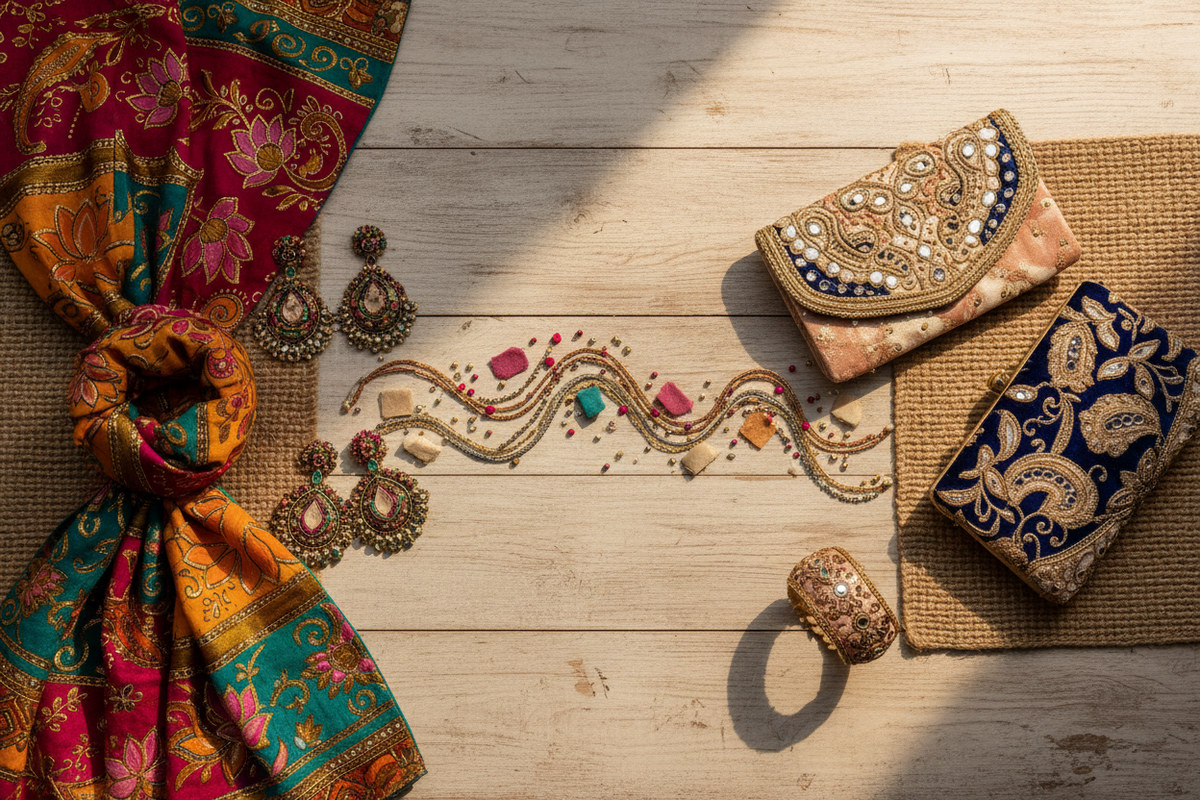
There's a particular kind of magic in watching a craft grow up. What starts as one person with a paintbrush and an idea can, over the years, turn into something much bigger, without ever losing the hand that shaped it. That's the story sitting quietly behind every KrutiArts piece. It began with Hand-Painted Jewellery, small and personal, made on custom orders for people who wanted something no factory could copy.
Today, that same spirit lives on in Hand-Embroidered Jewellery, richer in texture, bolder in colour, and just as deeply rooted in Indian craft traditions. This piece traces that journey, from paint to thread, from a single artisan's table to a full collection of Handcrafted Earrings, Necklaces, Potli Bags, Bangles, and more.
Where It Started: The Handpainted Years
Long before embroidery entered the picture, KrutiArts built its name on hand-painted fabrics and accessories, each one finished on custom order rather than pulled off a production line. Fabric, wood, and metal became the artist's canvas, and every brushstroke carried a bit of personal expression that no two buyers ever received quite the same way. This is what set the brand apart early on: not perfection, but presence. You could feel the hand that made it.
As the audience grew, so did the range. Hand-painted wooden accessories followed, then earrings and neck pieces that leaned into a rustic, earthy look rather than a polished, factory-made shine. It wasn't about chasing trends. It was about giving Indian art forms, the ones tucked away in dupattas, wall hangings, and folk motifs, a wearable, everyday form.
The Shift Toward Embroidery
Somewhere along the way, thread started doing what paint once did. Hand-Embroidered Jewellery brought in new textures: beads, motifs, oxidised metal, mixed materials, and with it, a slightly bolder, chunkier aesthetic that suited festive wear and everyday styling alike. Chokers studded with beads and wood, long necklaces layered with shells and motifs, statement Jhumka-style earrings, the embroidery era gave KrutiArts a fuller vocabulary to work with.
This wasn't a rejection of the handpainted roots; it was an expansion. Many pieces still carry painted elements alongside embroidered ones, which is part of why the brand's Handcrafted Earrings and Handcrafted Necklaces feel so layered up close. Nothing about them looks mass-produced, because nothing about them is.
Beyond Jewellery: A Wider World of Handmade Accessories
The evolution didn't stop at earrings and necklaces. Handmade Potli Bags became part of the offering, embroidered and detailed to match festive outfits rather than sit as an afterthought accessory. Handmade Bangles followed a similar path: oxidised, hand-finished, meant to be stacked rather than worn one at a time. Even Handmade Hair Accessories found their place in the lineup, proof that the brand's idea of "wearable art" was never limited to just jewellery.
What ties all of it together is intent. Each category exists because someone sat down, thought about how it should look and feel, and then had it made by hand, not because a catalogue needed filling out.
Why This Evolution Matters
In a market flooded with lookalike, machine-made accessories, Indian Handmade Jewellery holds a different kind of value. It's slower to make, harder to copy, and impossible to replicate exactly, which is exactly the point.
The move from hand-painted to hand-embroidered work at KrutiArts isn't just a design choice; it reflects a brand staying true to handmade values while still growing its craft vocabulary year after year. For anyone searching for Handmade Accessories India that actually feel distinctive rather than interchangeable, this kind of evolution is worth paying attention to.
About KrutiArts
Founded in 2015 by Kruti Popatia, KrutiArts began as a passion project rooted in hand-painted fabrics made on customised orders, later growing to include hand-painted wooden pieces and embroidered jewellery. The brand also works to support women artisans, giving many of them the flexibility to work from home while combining traditional Indian embroidery with a more contemporary look.
Design decisions rest largely with Kruti herself, while the actual embroidery and crafting are carried out by artisans working with sourced raw materials. From a homegrown idea to a brand with an online presence and a physical store in Surat, KrutiArts continues to hold onto the same idea it started with: accessories that carry the mark of a human hand, not a machine.


